


December, 2026
Franco Barros, M., & Meliss, M. (2026). El perfil combinatorio en contraste: Aproximaciones al uso de los verbos de comunicación escribir/schreiben basadas en datos extraídos de corpus comparables. Revista Signos. Estudios de Lingüística, 59(122).
September, 2026
Pinheiro, J. (2026). Ismard, Paulin; Macé, Arnaud, La Cité et le Nombre. Clisthène d’Athènes l’arithmétique et l’avènement de la démocratie, Paris, Les Belles Lettres, 2024, 202 pp. ISBN: 978-2-251-45639-3. Humanitas, (86), 599-602.
September, 2026
Fonseca, C. (2026). O episódio da tempestade no romance bizantino tardio. Ágora: Estudos Clássicos em Debate, 28(1), 131-142.
Pinheiro, C. (2026). A mudança espontânea de sexo nos tratados médicos de Amato Lusitano, Rodrigo de Castro, Zacuto Lusitano e Estêvão Rodrigues de Castro. Ágora: Estudos Clássicos em Debate, 28(1), 251-264.
Reis, T. (2026). A estranheza de um simples medicinal: o uso de pó de múmia no tratado ginecológico de Rodrigo de Castro. Ágora: Estudos Clássicos em Debate, 28(1), 291-304.
August, 2026
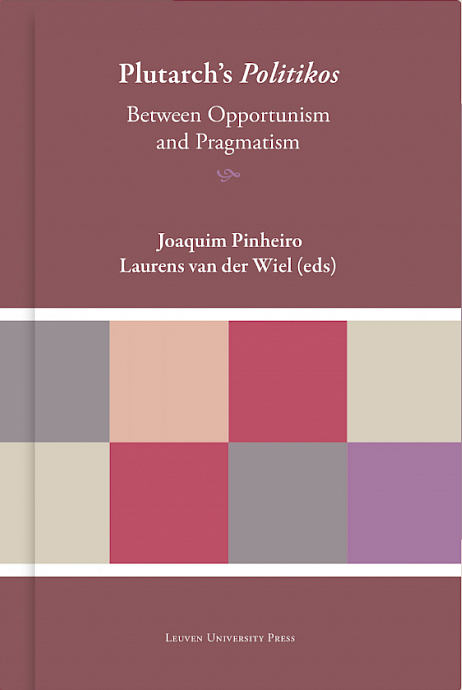
Pinheiro, J., & van der Wiel, L. (Eds.) (2026). Plutarch’s Politikos: Between Opportunism and Pragmatism. Leuven University Press.
Synopsis:
Political leadership and the enduring tension between ethical ideals and pragmatic action.
What makes a good political leader? This volume explores a central question in the work of Plutarch of Chaeronea, one of antiquity’s most influential moral and political thinkers. Drawing on ten case studies, it shows how Plutarch used famous figures from the Greek and Roman past to reflect on leadership in his own time under Roman rule.
The chapters in this edited collection reveal how leaders were often forced to balance ideals with practical demands, facing difficult choices between principle and praxis. They present a world in which ambition, ethics, and responsibility to the community are constantly in tension.
Bringing together contributions from both established and early-career scholars, the book offers fresh insights into Plutarch’s political thinking and his reflections on leadership which continue to resonate today. By bridging theory and practice, it will appeal both to specialists in Plutarch and to readers interested in ancient political thought.